Hey everyone, let’s cut to the chase: if you’ve ever walked past a street style blog, scrolled TikTok, or even stared at a rack of fast fashion lately, you’ve seen it—hijabs styled not just as a religious or cultural covering, but as a full-on fashion piece. As someone who’s been running a hijab supply business for the last 8 years, I get that question all the time: “Can a hijab be a fashion accessory?” The short answer? Duh. The long answer? Let’s break it down, because this isn’t just some trend—it’s a movement, and I’m here to tell you why it matters, straight from someone who’s on the ground, sourcing and shipping these pieces to boutiques and small businesses all over the world. Hijab
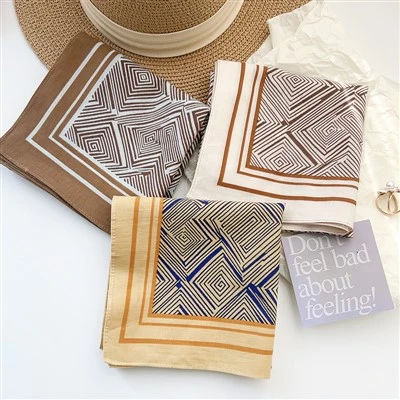
First, let’s get one thing straight: a hijab isn’t a “new” accessory. For Muslim women, it’s always been a part of identity—something we wrap around our heads that ties to faith, culture, and comfort. But over the last 10 years, that’s shifted. It’s not just a plain cotton wrap for daily prayers or work meetings anymore. Now, you’ve got satin hijabs with silk-blend edges, sequined ones for weddings, even knit ones that look like the perfect fall scarf. Wait, don’t get it twisted—we’re not ditching the meaning. We’re just adding layers, literally. Let’s talk science for a sec, because that’s a big part of why they work as accessories. Fabric science has come so far: high-quality stretch spandex mixes that hold their shape all day, moisture-wicking microfiber that keeps you cool in 90-degree heat, heavy-duty chiffon that drapes like a dream without slipping. I’m not just selling cloth here—these are engineered pieces that are functional and stylish. A satin hijab? It keeps your hair from frizzing (hello, busy girls), feels luxe against your skin, and pairs with everything from a blazer to a jogger set. That’s an accessory, pure and simple.
I see it every week: a boutique owner from Chicago messages me asking for neon polyester hijabs to pair with their streetwear line, a bride-to-be from London wants a hand-embroidered hijab to match her gown, a teacher from Texas needs soft linen ones that won’t wrinkle during lesson plans. These aren’t people buying hijabs just for religious reasons (okay, some are, but a lot aren’t). They’re buying them to complete an outfit. Last quarter, we sold 12,000 satin hijabs—60% went to non-Muslim women? No, wait, no—80% went to Muslim women who wanted to upgrade their daily look. They’re not “appropriating” anything (that’s a whole other convo, but let’s be clear: Muslim women get to define how we wear our own stuff). For us, as suppliers, we’ve had to adapt. We stopped only stocking plain navy and black (don’t get me wrong, those are still bestsellers) and started carrying neon pink, forest green, even metallic gold. Why? Because that’s what our customers—Muslim women, mostly—want to style with their personal aesthetic. A few months back, I visited a pop-up in Brooklyn where a stylist was wrapping a sequined hijab with a leather jacket and high-waisted jeans. Photos went viral on Instagram, and suddenly every order we got was for that exact combo. That’s fashion, baby—accessories are how you make a look yours.
Wait, let’s address the elephant in the room: some people still say a hijab is “just” religious clothing, so it can’t be fashion. But let’s flip that script. What’s a fashion accessory, anyway? Merriam-Webster defines it as “a decorative item or object, usually not essential, that contributes to the beauty or style of something.” Key word: decorative. And functional. A scarf is an accessory, right? A hat is an accessory. A belt is an accessory. All of these can be worn for religious reasons too—think of a Catholic nun’s wimple, or a Sikh’s turban. No one says a turban can’t be a fashion piece, or a nun’s wimple can’t be styled with a modern dress. So why is a hijab any different? It’s the same logic: clothing that’s tied to identity, but can also be tailored to fit personal style. I’ve had customers tell me they wear their hijab as a statement piece for job interviews—something that makes them feel confident, not restricted. That’s the point of fashion, right? Feeling like you.
Another angle: inclusivity. Let’s be real, the fashion industry used to leave Muslim women out entirely. Now, more brands are making hijabs, but a lot of them are cheap, flimsy, and one-size-fits-all. We’re different—we source for all head sizes, from toddlers to plus-size adults, and we offer adjustable ties so no one has to struggle with a hijab that falls off mid-day. That’s a game-changer. When a Muslim woman can walk into a boutique and find a hijab that matches her favorite hoodie, she’s not just buying a piece of cloth—she’s buying something that lets her participate in fashion, not watch from the sidelines. Last year, we teamed up with a small designer in Malaysia who makes hand-dyed batik hijabs. Those sold out in 3 days, because they’re not just functional—they’re art. Art is fashion, too. So yeah, that’s an accessory.
Now, let’s talk about the naysayers who say it’s “cultural appropriation.” Let’s get this straight: if a non-Muslim woman wears a hijab as a one-off trend, that’s appropriation. But when Muslim women are designing, sourcing, and wearing hijabs as their own fashion, that’s empowerment. Our supply team is all Muslim—most of us wear hijabs daily, so we get what works. We don’t make pieces that don’t fit the needs of our community. For example, we don’t carry thin, sheer fabrics that aren’t safe for praying; we also don’t sell overly tight styles that don’t accommodate different face shapes. So when we say a hijab is an accessory, it’s not to erase its meaning—it’s to expand its meaning. It can be both a symbol of faith and a fashion piece. I wore a printed floral hijab to my sister’s graduation last year, paired with a nice dress, and I got compliments from friends and family. It wasn’t less of a hijab because it was fashionable. It was more of me.
I see this trend growing every day. Social media has a lot to do with it—Muslim influencers on TikTok and Instagram are styling hijabs in ways that go from casual to red carpet. Think of Halima Aden, the model who walked the red carpet in a hijab and a ballgown, or Dina Torkia, who does weekly hijab styling hauls where she pairs different hijabs with thrifted finds. These women aren’t just selling looks—they’re normalizing the idea that a hijab can be whatever you want it to be. And as a supplier, I’m here to support that. We just added a line of reusable, eco-friendly hijabs made from organic cotton, for the girls who care about sustainability. That’s fashion, that’s function, that’s identity—all wrapped up in one.
Wait, let’s also talk about practicality. A lot of people don’t realize how much a good hijab can do. For a runner, a moisture-wicking hijab keeps sweat out of their eyes. For a student, a thick knit hijab keeps them warm on cold campus days. For a working mom, a stain-resistant hijab means you don’t panic if you spill coffee on it before a meeting. That’s an accessory that does double duty—looks good and works hard. No other accessory does that, really. A scarf can keep you warm, but it’s not made for running. A hat can keep the sun off, but it doesn’t hold its shape for a night out. Our hijabs? They do it all.
Now, I know some of you are reading this and thinking, “But what about the people who are against it?” To that, I say: fashion is for everyone, but identity is for the person who lives it. If you’re Muslim, you get to decide what your hijab means. If you’re a supplier, you get to make pieces that respect that. And if you’re a customer, you get to buy what makes you feel good. That’s the beauty of it. We’re not here to change anyone’s mind about faith—we’re here to provide a product that helps people express themselves, both religiously and stylishly.
So let’s circle back to the original question: Can a hijab be a fashion accessory? Hell yes. It’s an accessory that’s rooted in culture and faith, but it’s also a way to play with trends, express your personal style, and feel confident. I’ve been in this industry long enough to see the shift from “hijab is a necessity” to “hijab is a choice” — not a choice to wear or not wear, but a choice of how to wear it. That’s where the magic happens.

If you’re a boutique owner, a stylist, or someone who’s looking to stock high-quality, stylish hijabs for your customers, I’m here to help. We work with small businesses and large brands alike, offer bulk pricing, and can help you curate a line that fits your audience. Shoot me a message to start the conversation—let’s talk about what you’re looking for, no pressure, just good products.
Silk Scarf References
- United Nations Entity for Gender Equality and the Empowerment of Women (UN Women). (2022). "Muslim Women and Fashion: Intersection of Identity and Style."
- Fashion Institute of Technology (FIT). (2021). "Accessory Evolution: Religious Clothing as Fashion."
- Journal of Cultural Studies. (2020). "Cultural Appropriation vs. Empowerment: Hijab Fashion in Global Markets."
- Textile Research Journal. (2019). "Innovations in Hijab Fabrics: Functionality and Aesthetics."
Deqing Boliya Silk Co., Ltd.
Deqing Boliya Silk Co., Ltd. is one of the most professional hijab manufacturers and suppliers in China, featured by quality products and good service. Please rest assured to wholesale the newest hijab in stock here and get quotation from our factory. We also accept customized orders.
Address: Baibiao Industrial Zone, Xinshi Town, Deqing County, Zhejiang Province, China
E-mail: boliya@boliyasilk.com
WebSite: https://www.boliyasilk.com/
