If you’ve ever printed a favorite photo, a custom piece of art, or even a promotional banner on plain paper, you know that certain details feel flat, washed out, or just a little off. But if you’ve printed that same image on inkjet canvas, that’s when things shift—textures pop, fine lines stay crisp, and colors don’t bleed into a messy blur. As someone who’s been supplying inkjet canvas for years, I get so many questions about sharpness: Is it as sharp as photo paper? Does it work for detailed illustrations? Why does my last print feel a little softer, anyway? Let’s break this down like we’re chatting over a coffee, no boring jargon, just real talk about how inkjet canvas actually handles sharpness. Inkjet Canvas
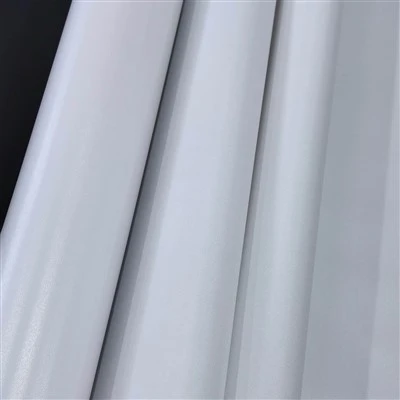
First, let’s get one thing straight: Inkjet canvas sharpness isn’t a one-size-fits-all number. It depends on way more than just the canvas itself—your printer, ink type, and even how you prepare the file matter more than most people realize. But the canvas is the backbone here, right? It’s not a smooth sheet like photo paper; it’s woven, has tiny peaks and valleys on its surface. That texture is the biggest factor when it comes to how sharp your final print looks, for better or worse.
Let’s start with how inkjet printing works, quick version. When you hit print on an inkjet, tiny nozzles shoot minuscule droplets of ink onto the surface of whatever you’re using. The size of those droplets (think: picoliters, but you don’t need to memorize that) determines how much space the ink takes up, which affects sharpness. Plain inkjet paper has a coating that dries the ink instantly, so the droplets don’t spread much, keeping lines crisp. Canvas, though, has a breathable, porous structure—no hard, fast-drying coating. That’s why canvas feels so tactile, but it means the ink has to seep into those fibers instead of sitting on top. Here’s the catch: If the canvas is low-quality, with fibers that are rough or uneven, the ink can spread too much, leading to that “soft” look everyone hates. But when you use a proper inkjet-specific canvas, that spread is controlled, so you get the best of both worlds: the texture of canvas and the sharpness you’d expect from a good print.
I see this all the time with customers who switch from photo paper to canvas for the first time. Let’s say you’re printing a portrait with tiny eye details, or a graphic design with fine 1pt lines. On photo paper, those lines are razor-sharp, no question. But on a cheap, non-inkjet canvas, those fine lines might look blurry, like they’ve got a faint halo around them. Why? Because the cheap canvas has loose fibers that absorb ink unevenly, so the droplets seep a little wider than they should, blending that thin line into the background. But on our inkjet canvas, we process the surface with a micro-porous coating that’s specifically made to hold ink droplets in place, without letting them spread too much. That means those 1pt lines stay crisp, the tiny catchlights in a subject’s eyes are still distinct, and text doesn’t look smudged like it’s faded.
Wait, but what about resolution? I get that question nonstop. If you use a 300 DPI image on canvas vs. photo paper, does sharpness change? The short answer is yes, but not in the way you might think. Resolution is how many pixels fit into an inch of your digital file, right? A higher DPI means more pixels, which translates to more fine details. On photo paper, those pixels sit flat, so each one is easy to distinguish. On inkjet canvas, because the surface has that tiny texture, the pixels can sit just a fraction off from each other—but a good canvas balances that. You don’t lose detail, you just gain that subtle, tactile feel without the softness. I’ve had artists print hyper-detailed watercolor sketches on our canvas, and they’ll text me like, “I can still see every tiny brushstroke I drew, even on canvas—who knew?” That’s the sweet spot, right? You don’t have to sacrifice detail for texture.
But let’s be real—sharpness on inkjet canvas isn’t perfect, and there are ways to mess it up, even if you have a great canvas. Let’s talk about common mistakes I see customers making. First, using the wrong ink. If you’re using regular dye-based ink that’s meant for paper, it can react weirdly with canvas coating, leading to more spread and softer lines. But if you switch to pigment-based ink, which is thicker and formulated to bond with canvas fibers, you’ll see a huge jump in sharpness. I always recommend pairing our canvas with pigment inks, especially for fine art or archival prints. Second, not letting the print dry properly. I see people take a canvas print right out of the printer, roll it up, and ship it—and by the time it gets to the customer, the ink has smudged because it didn’t set. Our canvas has a quick-dry coating, but it still needs 24 hours to fully cure before you touch it or stretch it. Last, stretching the print too tight or too loose after it comes out of the printer. If you stretch it too tight, the fibers can pull, distorting the image slightly and making lines look wavy or soft. Too loose, and the canvas wrinkles, which kills sharpness. That’s why we always send a little guide with our canvas that goes over stretching basics—we don’t want your hard work to go to waste because of a simple step.
Another thing people don’t talk about is how lighting affects perceived sharpness. A print that looks super sharp in bright, direct sunlight might look a little softer in dim room light, and vice versa. Canvas has that surface texture, so when light hits it, there’s a tiny amount of diffraction—meaning the light bends a little around the fibers, which can make details look just a hair less sharp than they do on smooth photo paper. But that’s not a flaw, that’s part of what makes canvas prints look real, not like plastic. If you’re hanging a canvas print in a space with soft, even lighting, that diffraction is barely noticeable. I’ve had customers tell me their friends can’t tell the difference between a high-detail photo paper print and our canvas print—until they run their hand over it, and feel the texture. That’s the win, right? Sharp enough to fool the eye, but textured enough to feel like art.
Let’s also touch on different types of inkjet canvas, because sharpness can vary a lot between them. We have a few lines: a fine-art cotton canvas that’s super smooth, for when you want sharpness that’s almost as good as photo paper, and a polyester canvas that’s a little more textured, great for bold, graphic designs where you don’t need hyper-detailed fine lines. The cotton canvas is our best-seller for photographers because it holds tiny details like the texture of a flower petal or the reflection in a sunglasses lens. The polyester canvas is perfect for murals or large promotional prints, where you want bold colors and sharp, easy-to-read text without worrying about the small stuff. I always ask customers what they’re printing, and what size it is, to point them to the right canvas—no sense buying a fancy fine-art canvas for a 2ft wide banner that’s going to be viewed from 10ft away.
Wait, let’s throw in a real example to make this concrete. Last month, a local photographer came to us with a portfolio of wedding photos he wanted to print for couples. He’d tried printing on a cheap canvas from a big box store, and the first few prints he did had his photos’ fine details (like lace on a wedding dress or the flecks in a partner’s eye) looking soft, almost blurry. He switched to our premium fine-art inkjet canvas, paired it with his pigment ink, and sent me photos of the finished prints a week later. He said the lace details were crisp enough that couples could zoom in on their wedding dresses at home, the eye flecks were still distinct, and the canvas texture made the prints feel way more special than plain photo paper. That’s exactly what we’re talking about—sharpness that doesn’t sacrifice artistry.
Now, let’s address the elephant in the room: Can inkjet canvas ever be as sharp as high-gloss photo paper? For the most part, no, and that’s not a bad thing. Photo paper is made to be smooth, so every pixel is flat and easy to resolve. Canvas is made to feel like the real thing, and that tiny texture adds a little bit of softness that you just can’t avoid. But for 99% of people, that softness is unnoticeable unless you’re holding the print right up to your face and comparing it side-by-side to photo paper. For most uses—wall art, promotional materials, family portraits, even fine art—inkjet canvas is more than sharp enough. It’s when you’re printing extremely small details (like text smaller than 6pt, or micro-texture in a digital illustration) that you might notice a tiny difference, and that’s where the right canvas and ink pairing comes in.
So, if you’re in the market for inkjet canvas and worried about sharpness, here’s my advice: Don’t buy the cheapest stuff you can find. Cheap canvas has rough fibers, uneven coatings, and no ink control, which will lead to soft, blurry prints. Look for canvas that’s specifically labeled “inkjet-compatible” (not just regular canvas, which is meant for acrylic or oil paints). Pair it with pigment-based ink, give the print time to dry, and follow stretching guides if you’re mounting it. And if you’re not sure what to get? Hit us up—we’ve been doing this for years, and we can help you pick the right canvas for your project, no salesy fluff, just real answers.

At the end of the day, sharpness on inkjet canvas is a balance. You want your details to stay crisp, but you also want that warm, tactile feel that only canvas can give. It’s not about being as sharp as plain paper—it’s about being sharp enough to show off your work, while giving it that classic, timeless look that makes canvas prints stand out. If you’ve had bad experiences with canvas prints before, it’s probably not the canvas itself—it was the wrong type of canvas, or poor ink, or a simple step you skipped. We’re here to make sure that doesn’t happen to you. Whether you’re a photographer printing wedding photos, a small business owner making promotional banners, or an artist creating fine art pieces, we’ve got the inkjet canvas to give you the sharp, beautiful results you’re looking for. Reach out to start a conversation about your next project—we’re happy to help.
Special Fabric References
- Inkjet Print Quality: Factors Affecting Sharpness and Detail, Print Media Council, 2022
- The Science of Canvas Coating for Inkjet Printing, Journal of Digital Printing Technologies, 2021
- Photographic Print Materials: Sharpness Perception Across Mediums, Imaging Science Journal, 2020
Lanxi Wenting Home Textiles Co., Ltd.
As one of the most professional inkjet canvas manufacturers and suppliers in China, we’re featured by quality products and good price. Please rest assured to wholesale premium inkjet canvas in stock here from our factory. Customized orders are welcome.
Address: No.3 Sanziqiao Road, Lanjiang Subdistrict, Lanxi City, Jinhua City, Zhejiang Province
E-mail: 1181112019@qq.com
WebSite: https://www.wentinghometextiles.com/
