Hey folks, if you’ve ever worked with piping systems—whether in a chemical plant, an oil and gas refinery, a food processing facility, or even a renewable energy setup like a wind turbine’s hydraulic lines—you’ve probably run into a titanium reducer. Let me guess, you’re here because you’re the one buying components for your team, maybe you’ve seen them listed in specs and wondered, “Wait, what actually makes up a titanium reducer? Is it just plain titanium, or is there more to it?” As a supplier of these bad boys, I talk to this question at least twice a day—from new engineers just learning the ropes, to seasoned procurement folks who’ve dealt with cheap knockoffs that corrode faster than a soda can left outside in summer. Today, I’m breaking this down like we’re shooting the breeze in a shop floor break room, no stuffy jargon, no long-winded paragraphs, just real info you can trust. Titanium Reducer
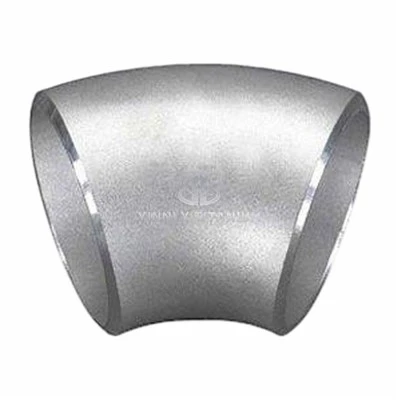
First off, let’s cut through the confusion: a titanium reducer isn’t just “metal shaped into a part that connects two different pipe sizes.” Its entire material makeup is why it’s so valuable—and why you’d pick it over steel, copper, or even stainless steel for certain jobs. If you’ve ever dealt with high heat, corrosive chemicals, or extreme pressure, you know regular parts don’t cut it. Titanium reducers show up because they’re lightweight, durable, and can stand up to environments that would turn other metals to mush. But what is the material, exactly?
Let’s start with the base: pure titanium sounds simple, right? But wait—commercial pure titanium comes in a few grades, and we don’t use just any grade for reducers. Grade 2 is the workhorse, that’s the one most of us reach for day-to-day. It’s 99.2% titanium, plus tiny traces of iron, oxygen, nitrogen, and carbon—total non-titanium stuff is under 0.8%. Why Grade 2? It’s got a great balance of strength (not as brittle as some higher grades), malleability (super easy to form into that tapered reducer shape without cracking or warping), and corrosion resistance. That’s key because when you’re forming a reducer, you’re heating the metal, pressing or spinning it, right? If it’s too brittle, it’ll split mid-form and you’ve just wasted material and time.
But here’s the thing: not all titanium reducers are pure titanium. For applications that are extra harsh—like handling super hot acids, or high-pressure subsea pipelines—we use titanium alloys. The most common one is Grade 5 titanium, which is the big dog for heavy-duty jobs. Grade 5 is about 90% titanium, 6% aluminum, 4% vanadium, and trace amounts of iron, oxygen, and nitrogen. That mix cranks up the strength a lot—way more than pure titanium—without adding a ton of weight. It’s still way lighter than stainless steel or nickel alloys, which is a win for piping systems that don’t want extra load stressing joints. I’ve had clients in offshore oil go from steel reducers to Grade 5 titanium, and they cut their structural load by like 60%—huge for platforms that have to stay stable in rough seas.
Wait, let’s get specific about what a reducer is, just to make sure we’re on the same page, because the material might be tailored to its shape. A reducer is that tapered pipe fitting that connects a larger pipe to a smaller one—like if you have a 6-inch line feeding into a 4-inch line. Reducers come in two main types: concentric and eccentric. Concentric is centered, like a cone, good for when you want flow to stay straight. Eccentric is off-center, used mostly in fluid systems to prevent air pockets (super important for pumps, trust me). Now, how does the material play into making either? When we form a concentric reducer, we might use pure titanium or Grade 5, depending on the pressure rating. Eccentric reducers, because their offset shape puts more stress on the edges, usually need a stronger alloy—so Grade 5 is the go-to there. No one wants a reducer that cracks right at the offset edge mid-operation, that’s a leak waiting to cause chaos.
Let’s debunk a myth I hear all the time: “Titanium reducers are the same as titanium pipes, just shaped different.” Nah, not even close. The material for a reducer isn’t just cut from a titanium pipe—most are manufactured via forging or machining, and the grade is chosen after we factor in the application. If a client is using it in a food processing plant, handling citric acid or sanitizers, we stick to Grade 2 because it’s non-reactive and meets FDA standards. If they’re in a chemical plant handling hydrochloric acid at 200 degrees, that’s Grade 5 titanium, no exceptions. I once had a client try to save a buck by getting a Grade 2 reducer for a high-heat acid line—lasted 3 weeks before corrosion ate a pinhole leak. They ended up buying 4 from us in a year because they learned the hard way: the material isn’t a one-size-fits-all.
What about the surface? Do we coat titanium reducers? Almost never, and that’s part of the material story. Titanium has a natural oxide layer that forms instantly when it’s exposed to air—like a tiny, invisible shield that stops corrosion. That’s why titanium doesn’t rust, even in saltwater. We don’t need to paint it or plate it because that oxide layer is way more durable than any external coating. The only time we do something is if a client needs a smoother surface for food or pharma use—we might do a light electropolish, which is just smoothing the surface (still pure titanium or Grade 5, just a finer finish) not adding any foreign material. No chrome, no paint, no nonsense. That’s a big selling point for us, because coated reducers can flake and contaminate fluids, which is a non-starter for sensitive industries.
Wait, let’s talk about other materials people mix up. Sometimes vendors will call something a “titanium reducer” but it’s actually a titanium-lined steel reducer. That’s not a real titanium reducer—those are for people who want the strength of steel at a lower cost, but if you actually need full titanium’s corrosion resistance, lined ones will fail. The lining is thin, so if you scratch it, the steel underneath starts rusting, and you’re back to square one. All our reducers are solid titanium—either Grade 2 or Grade 5, no cutting corners. I’ve turned away clients who asked for lined ones because I’d rather be honest than sell something that’ll let them down. That’s just how we do business.
Let’s get practical for a second. What’s the material specs look like, for those of you who need to pass them along to your engineering team? Grade 2 titanium reducers: ultimate tensile strength around 58,000 psi, yield strength around 40,000 psi, corrosion resistance comparable to 316L stainless steel, but way lighter. Grade 5: ultimate tensile strength is like 130,000 psi—twice as strong as Grade 2—yield strength around 120,000 psi, so it can handle way higher pressures, up to 10,000 psi in some cases. That’s why offshore and high-pressure piping swear by Grade 5.
Now, why does this matter to you? If you’re shopping for a titanium reducer, the material isn’t just a technical detail—it’s what’s gonna make your piping system last 20 years instead of 2. If you pick the wrong grade for your environment, you’re looking at downtime, repairs, lost product, maybe even safety hazards. I’ve seen refineries shut down for 3 days because a cheap reducer leaked, cost them millions. So taking 10 minutes to confirm the material grade is way cheaper than a full shutdown.
We always ask potential clients a few quick questions to make sure we send the right material: what’s the fluid you’re moving? What’s the temperature and pressure? Is there salt or chemicals involved? Do you need it for food, pharma, or general industrial? That way we can match Grade 2, Grade 5, or even a specialty grade (like Grade 7, which has palladium for extra corrosion resistance, for super aggressive acids) to their exact needs. No one-size-fits-all, and that’s why our reducers work.
Here’s the thing: as a supplier, we’re not just selling parts. We’re selling peace of mind. I’ve been in this game for 12 years, and the worst part isn’t a client sending back a broken part—it’s a client telling me they had an issue because they got a part made of the wrong material. So we’re transparent with every detail: what grade we used, why we used it, what it’s rated for. No hidden terms, no fine print.
If you’re out there shopping for titanium reducers, don’t just look for “titanium” on the spec sheet. Ask the vendor: what grade is it? Is it solid titanium or lined? Have you tested the corrosion resistance for my specific application? If they can’t answer that, run the other way. That’s why we post all our material specs on our site too, so you can check before you even call.
At the end of the day, the material of a titanium reducer is all about balancing performance with your needs. Grade 2 is great for most general jobs, Grade 5 for heavy duty, and that natural oxide layer means no extra coatings to worry about. It’s not some fancy, unobtainable metal—it’s a practical, durable material that solves real problems for piping systems around the world.

If you’re ready to grab a quote, or just have questions about which grade fits your project, hit us up. We don’t do pushy sales calls, just honest answers and parts that work. No B.S., no hidden fees, just reliable titanium reducers.
Titanium Reducer REFERENCES
ASM International. (2002). Titanium: A Technical Guide (2nd ed.). ASM International.
American Society of Mechanical Engineers (ASME). (2021). B16.9: Factory-Made Wrought Buttwelding Fittings. ASME.
Titanium Industry Association. (2019). Titanium Alloys for Piping Components: Grades, Properties, and Applications. Titanium Industry Association.
Baoji Yinnly Titanium Co., Ltd.
Baoji Yinnly Titanium Co., Ltd. is one of the most professional titanium reducer manufacturers and suppliers in China, featured by quality products and good service. Please rest assured to buy bulk titanium reducer in stock here and get quotation from our factory. Customized orders are welcome.
Address: Unit 902, Building 1, Creative Building, No. 195, Gaoxin Avenue, High-tech Zone, Baoji City, Shaanxi Province
E-mail: anna@yinnlyti.com
WebSite: https://www.yinnlyti.com/
