If you’ve ever picked up a garden hose on a sweltering summer day, only to yank it free from a twisted knot as soon as you touch it, or struggled to straighten a stiff frozen hose on a frosty spring morning, you’ve experienced the temperature-dependent flexibility of flexible PVC firsthand. As a flexible PVC hose supplier who’s spent the last 12 years talking to contractors, landscapers, agricultural technicians, and DIY homeowners, I can tell you this isn’t just a random quirk—this is a material property rooted in the chemistry of flexible PVC, and understanding it makes a huge difference in choosing the right hose for any job. Flexible PVC Hose
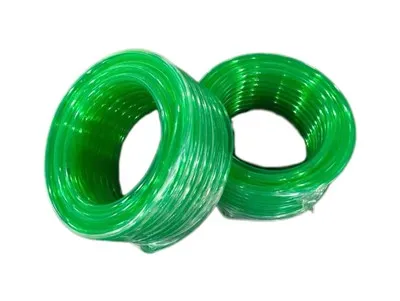
Let’s start with what flexible PVC actually is. If you’ve ever worked with rigid PVC pipe (the kind that’s glued together for plumbing), you’ll remember it’s hard, brittle, and inflexible. Flexible PVC is the same base polymer, but with a critical addition: plasticizers. These are small, oily molecules that get between the long, tangled PVC chains and push them apart, so they can slide past one another instead of locking tight. The type, amount, and mix of plasticizers are what give a flexible PVC hose its range of flexibility, but temperature is the most immediate external factor that changes how those plasticizers behave. That’s why, as temperatures shift from winter lows to summer highs, the same hose can go from stiff as a old ruler to soft enough to wrap around a pipe in seconds.
Let’s break this down by temperature ranges, because the effects are far from linear. I get calls all the time from landscapers who show up to a job in March, only to find their bulk hose reels are frozen solid. A lot of them try to yank the hose off the reel, and end up cracking the sidewall or splitting a connector. That’s because at temperatures below the glass transition temperature (Tg) of flexible PVC, the material stops being rubbery and becomes glassy. Tg is the temperature at which polymer chains stop moving freely—for rigid PVC, Tg is around 80°C, so it’s hard at room temp. For flexible PVC, we lower that Tg with plasticizers, so the Tg of our standard flexible PVC hoses is anywhere between -40°C and 0°C, depending on the plasticizer mix we use.
When temperatures drop below that Tg, those plasticizer molecules get sluggish, and the PVC chains can’t slide past each other anymore. The hose turns brittle, almost like a thin sheet of glass. I’ve seen a contractor leave a 100-foot hose coiled in a northern Wisconsin driveway overnight in January, and when he pulled it out, it cracked into three pieces before he even got to his first job. That’s exactly Tg at work. The good news is, if you know a hose’s Tg, you can match it to your climate. For our clients in places like Minnesota or Canada, we use hoses formulated with specialty low-temperature plasticizers that push Tg down to -40°C, so they stay flexible even when the wind chill hits -30°C. They still get stiffer in cold weather—we measure flexibility using a durometer, which tests hardness, and at -20°C, a hose that’s a 60A durometer at 20°C jumps to 85A, which is much stiffer—but it won’t crack, and you can still maneuver it if you take a minute to warm it up a little in the sun before uncoiling.
Now move to room temperature, around 20°C (68°F), which is where most of our hoses operate. This is where flexible PVC works exactly as it’s designed. The plasticizers are fully active, so the chains slide easily, giving the hose that soft, pliable feel that lets you coil it tight for storage, wrap it around corners without kinking, and connect to faucets or irrigation lines without cracking. This is the range where we see most of our sales—landscapers pick up our 5/8-inch garden hoses, farmers get our 1-inch lay-flat hoses for irrigation, and plumbers use our flexible PVC drain hoses for under-sink applications. At this temperature, flexibility is consistent enough that you can rely on the hose to hold its shape when needed, but bend easily when you need to route it around obstacles.
The range most people don’t talk about is high temperatures—above 30°C (86°F) and up to 60°C (140°F) and beyond. On a 100°F summer day, a hose left in direct sun gets much hotter than the air temperature. I’ve tested this with one of our premium garden hoses: at 20°C, its bending stiffness is 0.15 Nm (a measure of how much force it takes to bend it 90 degrees), at 40°C that drops to 0.08 Nm, and at 60°C, it’s down to 0.04 Nm. That means the hose gets almost twice as flexible in hot weather. What does that mean for real use? On a hot day, a garden hose will uncoil itself if you leave one end loose (I learned that the hard way when I left my hose out on a Texas summer day and found it stretched 50 feet across the yard), and it’s way more prone to kinking if you step on it or lay it over a rock. The tradeoff here is that too much heat (above 65°C) starts to break down the plasticizers over time. We’ve had clients who leave their hoses on black asphalt all summer, and after two years, the hoses get soft and sticky, and even leak at the connectors. That’s not flexibility working for them—that’s plasticizer leaching out because of consistent high heat.
Now, you might be wondering: is all flexible PVC hose the same? Short answer: no. That’s why as a supplier, I always ask clients two questions before recommending a hose: what’s the average temperature range you’ll be operating in, and what’s the intended use? A $10 garden hose from a big box store might be made with cheap plasticizers that have a Tg of -5°C, so it’ll crack if the temperature drops below freezing, and turn sticky after a year of sun. Our premium line uses phthalate-free, durable plasticizers that are formulated for consistent temperature performance—we test every batch at our facility by cooling them to -40°C and heating them to 80°C, checking flexibility and sidewall integrity, to make sure they hold up.
I also get a lot of questions about how flexibility changes over time, not just temperature. UV exposure, repeated bending, and chemical exposure all affect flexibility, but temperature is the most immediate variable. For example, a hose that’s designed for agricultural use, where it’s uncoiled and recoiled hundreds of times a season, will degrade faster in temperature extremes than a hose that’s stored indoors. That’s why we offer different grades: our general-purpose hose is for areas with moderate temps, our cold-weather grade for northern climates, and our high-heat grade for places like Arizona or desert agricultural operations.
Let me share a recent example that stuck with me. Last year, I spoke to a contractor in Calgary who’d been buying cheap hoses from a local hardware store for his snow removal jobs. Every winter, he’d go through 4-5 hoses because they’d crack when he uncoiled them after a snowstorm, when temperatures were around -10°C. He switched to our cold-weather grade hose, and this past winter he only had to replace one, when a shovel nicked the sidewall, not because of cold-related brittleness. That’s the difference between understanding how temperature impacts flexibility and buying a hose that’s not formulated for the conditions.
Another common mistake: storing hoses in extreme temperatures. A lot of people leave their garden hose coiled outside all winter, which exposes it to weeks of temperatures below Tg. Even a good cold-weather grade hose will get stiffer over time if it’s left coiled in freezing temps, because the pressure of being coiled makes the PVC chains lock in place. Uncoiling it for a few hours on a mild day before winter really starts will let the chains relax, so you don’t get cracks when you try to straighten it. Similarly, storing hoses in a hot garage or on a sun-warmed roof all summer makes them flexible to the point of being too soft, which can lead to stretching and leaks over time. The sweet spot for storage is between 10°C and 25°C, where flexibility stays consistent and plasticizers don’t leach out.
If you work in a field where hoses are a critical part of your operations—whether that’s landscaping, agriculture, plumbing, or construction—understanding this flexibility-temperature relationship isn’t just a fun fact. It saves you money, time, and frustration. Buying a hose that matches your climate and temperature conditions means fewer replacements, fewer job delays, and less waste from cracked or degraded hoses.
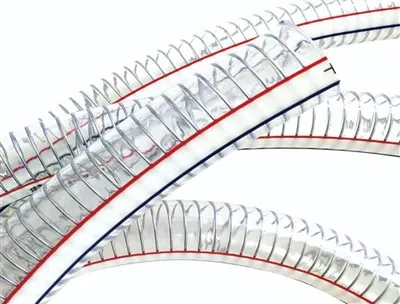
I’ve spent 12 years in this industry, and I’ve learned that the best flexible PVC hose isn’t just the cheapest one on the shelf. It’s one that’s engineered to perform in the temperatures you’ll actually face. If you’re tired of hoses that crack in the cold or turn sticky in the heat, or if you’re not sure which grade is right for your job, I’d be happy to walk you through our product lines, share test data for temperature performance, and help you pick a hose that will work reliably year-round.
PVC Suction Hose Reference
- Lambla, M. F. (2000). Polyvinyl Chloride. In: Mark, J. E. (Ed.), Encyclopedia of Polymer Science and Technology (4th ed.). Wiley-Interscience.
- Ohama, Y., et al. (2015). Effect of plasticizer type and concentration on thermal and mechanical properties of flexible polyvinyl chloride. Journal of Applied Polymer Science, 132(12), 41789.
- ASTM D792-20. Standard Test Methods for Density and Specific Gravity (Relative Density) of Plastics by Displacement. ASTM International.
- ASTM D2240-15e1. Standard Test Method for Rubber Property—Durometer Hardness. ASTM International.
- Crawford, R. J. (1998). Plastics Engineering (2nd ed.). Butterworth-Heinemann.
Weifang Xinzhiyuan Plastic Co., Ltd.
As one of the most experienced flexible pvc hose manufacturers and suppliers in China, we offer a wide range of products with superior quality. Please feel free to wholesale premium flexible pvc hose made in China here from our factory. We also accept customized orders.
Address: No. 700, Tongle Street, Economic Development Zone, Changle County, Weifang City, Shandong Province
E-mail: hua@xzypvchose.com
WebSite: https://www.pvchose-xzy.com/
