Hey everyone! Let’s cut to the chase—if you’ve ever sourced push buttons for industrial controls, consumer electronics, or even automotive panels, you’ve probably stumbled on the term “insulation resistance” and thought, “Wait, what the hell does that even mean for a push button specifically?” And as a push button supplier that’s talked through this with 100+ clients (from startup design teams to old-school factory maintenance crews), I get why this can feel like a random, nitpicky spec to fixate on. But trust me, it’s the difference between a button that works for 5 years and one that craps out in 6 months. Push Button
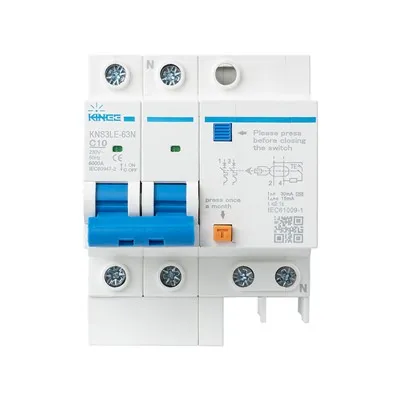
First, let’s ground this: insulation resistance (IR) isn’t some vague engineering buzzword—for a push button, it’s a measure of how well the non-conductive parts of the button stop electricity from leaking where it shouldn’t. Think about every push button you’ve pressed: there’s the plastic shell you hold, the metal contact that makes/breaks the circuit, and tiny air gaps or insulating layers between those bits. IR is just a number that tells you how much current can sneak across those gaps instead of going where it’s supposed to.
Wait, but why does this matter specifically for push buttons, not just any old electronic component? Let’s break down where push buttons live. Some are inside your phone’s volume rocker—low voltage, dry environment, so you could get away with a pretty low IR. Others are on a factory control panel in a chemical plant—high voltage, wet with cleaning fluids, full of dust that conducts electricity if it gets moist. That’s where IR becomes make-or-break. If a button on that factory panel has bad IR, electricity could leak through the plastic housing to the metal screw holding it in place, or across the contacts to a wire it shouldn’t, causing shorts, blown fuses, or even safety hazards for the workers. No joke—we had a client last year whose cheap push buttons (super low IR) caused a machine to short out during a packaging shift, costing them $12k in downtime. Not the kind of call you want to take at 2 a.m. on a Monday.
Now, let’s get real about how push button IR is actually tested—no lab jargon, I promise. When we test our buttons, we apply a low voltage (usually around 500V DC, unless it’s for super low-voltage stuff) across the insulating parts—like between the live contact pin and the metal housing of the button. We then measure how much current flows through that insulation. The formula for IR is super simple: IR = Voltage / Current. So if we apply 500V and only get 0.000005 amps (5 microamps) leaking, that’s 100 million ohms of resistance—super good. If we get 0.0005 amps (500 microamps), that’s only 1 million ohms—way too low for industrial use.
But here’s the thing: IR isn’t a one-size-fits-all number. It depends on three main things: 1) the materials we use, 2) how we manufacture the button, and 3) the environment it’s going to live in. Let’s chat materials first. We use things like UL94-V0 grade plastic for most of our industrial buttons—it’s a flame-retardant thermoplastic that’s way more insulating than cheap ABS plastic you find in random dollar-store gadgets. We also add tiny insulating gaskets between the contact and the housing, which is a cheap step that cranks IR up big time. I’ve seen competitors skip those gaskets to cut costs, and their IR numbers drop so fast that a year later, their buttons are leaking current like a sieve.
Next, manufacturing. Even the best materials mean nothing if we cut corners during assembly. For example, when we mold the plastic around the contact pins, we have to make sure there are no tiny air bubbles or gaps—those are like superhighways for current leakage. We use precision injection molding machines that keep pressure consistent, whereas cheaper suppliers might use older machines that leave tiny gaps. We also clean every button before it’s packaged—remove any leftover metal shavings or plastic dust that could bridge the insulating gaps. That extra 2 minutes per button? It adds to the cost, but it’s why our IR numbers stay consistent batch after batch.
Finally, the environment your button is in. If you’re putting buttons in a dry, indoor consumer device, 10 million ohms of IR is probably enough (though we still go higher just to be safe). But if it’s for outdoor equipment, like a farm’s irrigation control panel, that button is getting rained on, covered in mud, and exposed to fertilizer dust. Those things lower IR fast—water is conductive, dust holds moisture. For those, we specify buttons with at least 1 billion ohms of IR, and we even test them after spraying with salt water to simulate harsh coastal or rainy conditions. We had a farmer client test our outdoor buttons vs. a competitor’s: after 6 months of rain and dirt, our IR was still at 800 million ohms, while the competitor’s had dropped to 20k ohms—total failure.
Wait, but let’s bust a common myth: people think higher IR is always better. Not exactly. If you have a button that’s rated for 24V and has 10 trillion ohms of IR, that’s fine, but it’s not necessary—and sometimes, ultra-high IR can cause issues with signal integrity in super low-voltage circuits (like 3.3V in IoT devices). So it’s all about matching the IR spec to your application. That’s where we come in—we don’t just sell push buttons off the shelf; we help you pick the right IR rating for what you’re building, so you’re not overpaying for unnecessary specs or underbuying what you need.
Let’s talk about how to actually check the IR of a push button, in case you’re testing some you already have. You don’t need a fancy lab—you can get a basic insulation resistance tester (they’re like $50 on Amazon, nothing crazy). Just disconnect the button from its circuit, attach one probe to the metal contact pin, and the other to the metal housing of the button (or the backplate that’s mounted to the panel). Apply the low voltage (follow the tester’s instructions, usually 500V for industrial), and take the reading. If it’s below 1 million ohms, that button is probably not going to last long in anything but a dry, low-voltage spot. If it’s 10 million or higher, you’re in good shape for most consumer uses. For industrial or outdoor, aim for 100 million ohms minimum—anything less and you’re rolling the dice.
I want to be transparent about our numbers, since that’s what clients care about. Our standard industrial push buttons have a minimum IR of 1 billion ohms at 500V DC. Our heavy-duty ones for harsh environments? We test them to 10 billion ohms, and we back that up with batch test reports—so you don’t have to take our word for it. We’ve had clients that switched to us because their old supplier’s IR numbers were all over the place—one batch was 50 million, the next was 500k—because they cut corners on manufacturing. Our batch-to-batch consistency is one of the biggest things we pride ourselves on, and IR is a huge part of that.
Another thing that a lot of people miss: IR changes over time, especially if the button is exposed to bad conditions. We do accelerated life tests on all our buttons—we bake them at 85 degrees Celsius and 85% humidity for 1,000 hours, then test their IR. If it drops more than 10% after that, we scrap the design. That’s how we know our buttons will keep their IR for 10+ years in real-world use. Competitors often skip those tests to save time, which is why their buttons fail unexpectedly.
Wait, let’s circle back to that factory client I mentioned earlier. They were using push buttons from a no-name supplier for their assembly line. One day, a worker pressed a button, and the machine shorted out, sending a surge through the control panel that damaged $20k worth of wiring and sensors. When they tested the failed button, its IR was only 120k ohms—way too low for their 480V system. They switched to our heavy-duty push buttons, and in the 3 years since, they haven’t had a single IR-related failure. That’s the difference between picking a supplier that knows their stuff and one that’s just guessing.
So, to wrap this up, what’s the takeaway on push button insulation resistance? It’s not just a number in a spec sheet—it’s a critical performance metric that affects reliability, safety, and cost over the life of your product or equipment. It depends on the materials, manufacturing quality, and environment of your button, and matching the right IR rating to your use case is non-negotiable for avoiding headaches down the line.

If you’re in the market for push buttons, or you’re having issues with your current ones failing due to bad insulation resistance, hit us up. We can walk you through what spec you need, send over test reports, and make sure you get buttons that will hold up to whatever you’re throwing at them. No hard sells, just straight talk about what works.
Ultrasonic Sensor References
- International Electrotechnical Commission (IEC 60947-5-1), Low-voltage switchgear and controlgear – Part 5-1: Control circuit devices and switching elements – Electromechanical control circuit devices
- Underwriters Laboratories (UL 508), Industrial control equipment
- Push Button Industry Association (PBIA) Performance Standards for Industrial Control Push Buttons
Wenzhou Kinee Electrical Co., Ltd.
We are one of the most professional push button manufacturers and suppliers in China, featured by quality products and good price. Please rest assured to buy advanced push button made in China here from our factory. We also accept customized orders.
Address: Unit 1, Building 31, Wenzhou Wenbo Science and Technology Industrial Park, No. 706 Yanyun Road, Lingkun Street, Oujiangkou Industrial Cluster Area, Wenzhou, Zhejiang Province
E-mail: sandyma@kinee.net
WebSite: https://www.kinee.net/
